Led Zeppelin - Led Zeppelin II
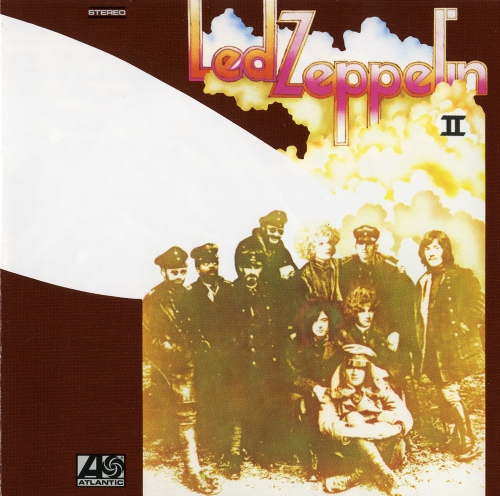
Led Zeppelin II, also known by the unofficial nickname The Brown Bomber, is a rock and roll album, the second released by English band Led Zeppelin. Here they further developed ideas established on their debut album, creating a work which became even more widely acclaimed and arguably more influential. The album was created and assembled during a hectic and much-traveled period of the band's career-each song was separately recorded, mixed and produced at various studios in the UK and the US. The finished tracks also reflect the raw, evolving sound of the band and their innovations as live performers from January through August 1969: during this time the group completed four European and three American concert tours. Led Zeppelin II largely writes the blueprint for 1970s hard rock: blues-derived songs like "Whole Lotta Love", "Heartbreaker", "Moby Dick", "The Lemon Song" and "Bring It on Home" are now standards of the genre, where the guitar-based riff (rather than vocal chorus or verses) defines the song and provides the key hook. Such arrangements and emphasis were atypical in popular music of 1969. Jimmy Page's electric guitar solo on the song "Heartbreaker" was emulated by many younger rock guitarists, and exemplifies the group's intense musical attack. Innovative recording and drum miking effects on tracks such as "Ramble On" and "Whole Lotta Love" also demonstrate Page's considerable skill, resourcefulness and originality as a producer. The instrumental "Moby Dick" features John Bonham's drum solo, which would later be extended to a half-hour or more in concert performances. Led Zeppelin II also experimented with other musical styles and approaches, as on the alternately soft-and-loud "What Is And What Should Never Be" and "Ramble On" (which featured Page's acoustic guitar), or the pop-influenced ballad "Thank You". With its mysterious atmospherics, "Ramble On" pioneers hard rock's association with fantasy themes, which had partly derived from the psychedelic music of two to three years before, but also from Zeppelin lyricist Robert Plant's Middle-earth/Tolkien reading proclivities around this time. This direction would culminate for the band on their untitled fourth album (and countless subsequent groups would later carry the influence to further extremes). Commercially, "Whole Lotta Love" yielded Led Zeppelin's biggest hit; it reached #4 on the Billboard Top 100 in January 1970, after Atlantic went against the group's wishes by releasing a shorter version on 45. The single's B-side, "Living Loving Maid (She's Just a Woman)", also hit the Billboard chart, peaking at #65 in April 1970. The commercial success of this album also brought with it-as with their debut album-accusations of plagiarism (e.g. Willie Dixon's claim to the lyrics for "Whole Lotta Love"1). The music on Led Zeppelin II is considered an early forerunner of heavy metal, and helped inspire heavy metal performers such as Blue Öyster Cult, Deep Purple and Van Halen. Led Zeppelin II was the band's first album to hit #1 in the US knocking The Beatles' Abbey Road from the top spot.
01. Whole Lotta Love
♥
▶ Play

02. What Is And What Should Never Be
♥
▶ Play

03. The Lemon Song
♥
▶ Play

04. Thank You
♥
▶ Play

05. Heartbreaker
♥
▶ Play

06. Living Loving Maid (She's Just A Woman)
♥
▶ Play

07. Ramble On
♥
▶ Play

08. Moby Dick
♥
▶ Play

09. Bring It On Home
♥
▶ Play
